Saturday, 3 October 2015

Real cases and experiences of snake bite

I have read some real cases of people who has bitten by a snake before and their stories of the experience they've got after getting a snake bite. This will help me to get an idea of how I should make and plan my story for my snake bite project and also understand more about what will happen after bitten by a snake (how the venom effected on the body, etc).

1 st case:
The victim lives in Arizona and she visited her friend in Tucson who lived on the edge of the desert. As she wanted to pick some tomatoes, she walked close to the plants. Suddenly, she feels painful on her hand and she saw two small marks on her knuckles. When she was panic, her hand has already swelling and after five minutes she got bitten by the western diamondback rattlesnake, she suffered from intense pain, burning sensation around the wounds and feeling shocked. When she reached the hospital, her hand turned blue as the venom has started to destroy her blood vessels and within an hour after she got bitten, her arm had ballooned to twice of its original size. The rattlesnake venom will attack the tissue and blood and in order to stop that, she needs to inject antivenom. If she had got to the hospital an hour later after she got bitten, her arm would have been amputated. At first, the doctor told her that she was at risk as her skin can't stretch that much for the amount of swelling and the pressure will reduce blood flow which will cause the tissue to die. But after she has taken 22 vials of antivenom, the doctor said she was in good condition and so she stayed in the hospital for three days. Her arm was swollen and ballooned and she had gained 15lb in fluid. It took her a month for her hand to return to normal size and she still in pain and it took her months to recover. After four years later, her joints were still stiff. 

After reading the first case, I can imagined how the victim suffered from the pain which caused by the snake bite and understanding more about the process of how the venom works and react to her body either internal or external. A venomous snake bite takes a very long period of time for recovery and will lead to after effects as well. 

2nd case:
So in the second case, the victim is called Lorraine Jonsson who was 50 years old. He lives in Los Angeles, CA. She got bitten by a snake on her inner ankle and within seconds, she felt panic, has got blurred vision and the wound started to swell. There are twin puncture wounds on her ankle. Bruises and blisters started to form around the bite within one and a half hour and the venom started to melt the tissue near the wound within six hours after bitten. The victim hadn't told anyone where she had been hiking and she hasn't got any signals on her phone. She felt to the ground and tried to yell and find people for help and luckily there is a car appeared within a few minutes. The couple drove her through the park and they found a ranger to call the ambulance. She had stopped breathing as the venom has expanded to the lungs. But luckily within an hour after she got bitten by the snake, the doctor has injected 116 vials of antivenom which has saved her life. 

3rd case:
http://www.scielo.org.za/scielo.php?pid=S1681-150X2010000400011&script=sci_arttext
The above photo shows a 41 years old male who got bitten by a snake and results several snake bites on his left hand while he was sleeping. He managed to go to the hospital within 15 minutes after he got bitten. During the following two days, his arm was swollen and  'compartment syndrome of the forearm was clinically excluded by showing absence of paraesthesia, pain or passive stretch and disproportionate pain.'. He has got two bites on his arm and one of them is on the dorsum of the hand while the other one is on the dorsum of the ring finger. On below, it shows the process of how the would goes before the patient opted for a ray amputation.
'Surgery was delayed until full demarcation, which occurred 10 days after admission (12 days post injury). The ring finger was still viable but was necrotic and septic over the dorsal aspect, with partial destruction of the extensor tendons. This area showed a 5 by 5 cm undermined wound, with extensor tendon loss to the ring finger, as well as loss of the extensor digiti minimi quinti and partial sloughing of the third finger's extensor tendon (<50%). The wounds were dressed with Intrasite gel and the patient was empirically started on amoxicillin-clavulanate. Tissue samples were submitted for microbiological analysis, showing Morganella morganii and Proteus vulgaris, both sensitive to ciprofloxacin and trimethoprim-sulphamethoxazole. Considering the face that the patient was formally debrided and showed improvement prior to receiving the culture results, the initial antibiotic course was completed. The patient opted for a ray amputation. He current;y has good hand function and is participating in a rehabilitation program.'

4th case:
http://cdn.radiolive.co.nz/radiolive/AM/2013/5/2/35065/steven-rankin1.jpg?width=620
The victim is called Steve Rankin who is the producer of  the Discovery show 'Naked and Afraid' and he is 51 years old when the time he got bitten by the fer-de-lance snake at Costa Rica rainforest on the 23rd March, 2013. It took him 2 hours to go to the nearest hospital and luckily he was rescued. On below is an interview of him talking about his experience after bitten by the snake. 

'Within seconds, mu heart started racing, I felt a painful burning sensation in my left foot. I put my weight ton my right foot. I suddenly felt weak. The guys grabbed my shoulders and held me up. My knees immediately went to jelly.'
'My leg continued to swell for the next five or six days. My left foot blistered as the pain from the bite subsided. The trouble was, every time I stood up, the pain from the swelling took hold. I remember it felt like every muscle fiber in my leg was full of pressure and about the explode.... That pressure was more painful than the pain immediately after the bite, I'd never felt anything like it.'
'one week after the initial bite, the blisters popped and the resulting wounds began festering.'
'The flesh in my foot was rotting. Nurses put me on a gurney. As they wheeled me away. I watched my foot drip a trail of pus and blood onto the hospital clean floor.'
'The surgeons opened up my foot and removed the infected, liquefied flesh. They cut away extra bits of tissue that were beginning to go bad and dressed the ankle and foot with a vacuum bag- a bag polythene sack that they wrapped around my lower leg and attached to a pump. I was full of morphine, so I couldn't feel much pain, but my lower leg felt heavy and thick. It felt something like a throbbing concrete block.'
'They couldn't say that the spread of dead tissue had been completely arrested. I wondered if I was going to keep my foot.'
'After one more cleaning operation on my foot, Clinica Biblica released me on April 5th. I left San Jose around midnight on a Lear Jet kitted out like a mobile ICU. In Los Angeles, an ambulance drove me to Cedars Sinai Medical Center, where a team of new doctors took a look at me every few minutes. They performed an eight-hour operation that included taking a chink of flesh from my left thigh and grafting it onto my foot.'
http://cdn4.everyjoe.com/wp-content/gallery/steve-rankin/stephen-rankin-snake-bite-photos-1.jpg

The photo on above shows the flesh has started to necrotised and is recovering after the surgery and the photo is taken after 6 days he got attacked by the snake.
http://wa1.cdn.radiolive.co.nz/radiolive/AM/2013/5/2/35065/steven-rankin2.jpg?width=620
References: 
  • http://www.theguardian.com/lifeandstyle/2013/nov/23/experience-bitten-by-rattlesnake
  • http://www.backpacker.com/survival/out-alive-bitten-by-a-rattlesnake/#bp=0/img2
  • http://www.scielo.org.za/scielo.php?pid=S1681-150X2010000400011&script=sci_arttext
  • http://www.outsideonline.com/1916651/surviving-viper-bite

Friday, 2 October 2015

Understanding the antaomy of the human body

 https://s-media-cache-ak0.pinimg.com/originals/d3/d5/51/d3d5510cbfa3937aaabf622cd0504617.jpg
https://s-media-cache-ak0.pinimg.com/736x/df/c8/ea/dfc8ea2efb99aafce89c9c8ee4f4dcfb.jpg
Facial Anatomy:
It involves the structure of bones, the muscle and cartilage which is underneath our skin on the face. When we do make-up for the models or actors, it is important to know where the bones structure and so for example we will know where to do the highlight and contouring, etc. In special effects make-up, it is also concern the face and even body structure of the human body as sometimes you will want to remodeling a face to create your design of a character.

The bones on the face:
The skull is used to protects our brain, the eyes and also helps to delicate the structures of the ears. It forms the shape of the face and the head and also attached to the teeth and muscles as well. 'The bones are joined by sutures (immovable joints) with the exception of the mandible (lower jaw-bone), which is hinged and therefore moveable.' (Conway, 2004)
http://idey.me/wp-content/uploads/2013/08/face-shape.jpg
The bone structure also shows different face shapes.

When we know the names of the bones, we can point out exactly what area on the face we want to discuss on. For the forehead, 'there are two separate and distinct eminences, the frontal and the superciliary, which must ordinarily be considered separately in highlighting.
When source of light is directly overhead, forming a slight shadow between the two.' When we try to age a character, it is very important to know the changes on the bones structure, the muscles and the cartilage due to the age of the character. The only movable part on the skull is the mandible 

Body:
http://bio1152.nicerweb.com/Locked/media/ch50/50_34aHumanSkeleton-L.jpg
http://www.ducksters.com/science/bones_back.jpg
By understanding the names of the bones, we can point out straight away where we want to discuss on and also by knowing the structure of the bones, we can do highlights and shading on the body (body paint and creating horror or fantasy characters with special effects make-up, etc).

Age:
http://drballe.com/wp-content/uploads/2014/08/aging-06-big.jpg
Old age:
When a person beyond middle life, their skull structure will usually change and becomes more protruding. You can see more clearly if the person is thin. If the person is large and abundant, the skin will become flabbiness and double chins and pouches will be seen clearly. When people getting older, the skin will become more saggy. Hair may fall out and the eyebrows may become scraggly or bushy. The tip of the nose and the skin on the neck may droop as well. The teeth may fall out and the lips will become thinner than before. The hair color and also the skin will change. Wrinkles will be seen on the face, neck and hands and the hands may become bony. The nasolabial folds are creases which located from the nose to the lips and it will be seen more clearly when a person gets older.

Nose-
The upper section of the nose is named of the nasal bone, but on the lower part of the nose, it is considered as cartilage which attached to the nasal bone. 

Cheekbones-
The cheekbone, also known as the zygomatic arch is very important as when you do the contouring or apply blusher on the face, you need to see where it is located. Some people have protruding cheekbones and some people may need to feel them with their fingers. You can start by touching the top of the bone and then feel how it curves from the bottom of the cheekbones until you feel the bone under the eye. The angle of the cheekbones slope down from the ear and toward the center of the face.

Hollows-
There are the hollows in the skull and they are the orbital hollows, also known as the eye sockets and the temporal hollows which we usually referred to 'the temples'. The temporal hollows are not very deep, but due to the increasingly with age, it will be seen more clearly. The infra-temporal hollows are located under the cheekbones area. The lack of bony support makes the flesh to sink in underneath the cheekbone.When designing for old people or starvation character, the infra-temporal hollows will be sink in clearly.

Muscles on the face:
There are three types of muscles tissue and they all help to cause movements and they are:

  • voluntary muscle tissue ( it is attached to the bone)
  • involuntary muscle tissue ( it is found inside the digestive and urinary tract and also  the walls of the blood vessels)
  • cardiac muscle tissue (it is found in the walls of the heart)

http://hair-and-makeup-artist.com/wordpress/wp-content/uploads/2012/06/Facial-Muscles.jpg
  • Frontalis- It is located at the upper part of the cranium. It helps to raise our eyebrows.
  • Corrugator- It is located at the inner corners of the eyebrows. It helps us to frown. 
  • Procerus- It is located at the top of the nose between the eyebrows. It is used to form wrinkles over the bridge of the nose and depresses the eyebrows. 
  • Orbicularis Oculi- It is surround the eye area. It helps us to close our eyes and blink.
  • Nasalis- It is located over the front of the nose. It is used to compresses the nose which causes wrinkles
  • Temporalis- It is located from the side of the face and runs towards the upper jaw. It helps us to chew food and close our mouth
  • Masseter- It runs down and back to the angle of the jaw and is used to lift the jaw and gives the teeth strength when biting something.
  • Buccinator- It is used to puff out the cheeks when we keep food in our mouth when chewing, blowing, etc. It forms most of the cheek area and provide shape.
  • Risorius- It is located in the lower cheek and joins to the corner of the mouth. It helps to pull back angles of the mouth for instance, when we smile.
  • Zygomaticus- It runs down the cheek towards the corner of the mouth. It helps to pull the corner of the mouth upwards and sideways. 
  • Quadratus labii superiorus- It runs upward from the upper lip and it helps to lift the upper lip and open the mouth.
  • Orbicularis oris- It surrounds the lips and is used to form the mouth. It helps us to close our mouth and pushes the lips forward. 
  • Mentalis- It forms the chin and helps to lift the chin and also moves the lower lips outwards.
  • Traiangularis- It is located from the corner of the lower lip to over the chin. It hepls to pull the corner of the chin down. 
Muscles on the body:
http://humandiagram.info/wp-content/uploads/Muscles-of-the-Human-Body.jpg
  • Mentalis - it is used to lift the chin and moves the lower lips outwards
  • Triangularis- it is from the corner of the lower lip and extends over the chin. It helps to pull the corner of the chin down
  • Trapezius- it is from the sides of the neck to the upper back. It helps to rotate the shoulders, pull our head back, rotation of our head and draws back the scapula bones. 
  • Pectoralis- It is located at the front of the chest and under the breasts. It helps to pull our arms forwards and rotation of the arms. 
  • Deltoid- It is used to raise our arm from the side and pulls it backwards and forwards. It is located on the caps the shoulder. 
  • Occipitalis- It is located at the back of the skull and is used to help with the movement of the head.

The skin:
The skin is used to cover the body and it varies in thickness on different parts of the body. The thinnest skin is on the lips while the thickest is on the soles of the feet and palms of the hands as it is used to protect against friction,. Because the skin covers up the entire body, it can suffer from skin diseases or disorders. 

The functions of the skin-

  • Vitamins - Ultra- violent light hits the skin and turns into the synthesis of vitamin D
  • Sensory - the skin sensory nerve endings allow us to feel pain, temperature, pressure and touch
  • Heat regulation (homeostasis)- the skin helps to regulating body's temperature such as when we are warm, we do sweat while we are cold, the hairs in the skin stand on end to trap warm air
  • Absorption - the skin helps for absorbing small amounts of products when we apply on the surface of the skin
  • Protection- Melanocytes protect the body against UV damage by producing melanin. The acid Mantle protects against the invasion if microbes and dehydration. The cushioned layer of the subcutaneous layer of the skin protects the underlying structures against minor trauma
  • Excretion- Waste products and toxins, for instance, urea, are remove by the skin from the body in the form of sweat. 
  • Secretion- The skin produce and discharge sebum onto its surface. 

The structure of the skin-
http://7cream.ca/wp-content/uploads/2013/05/skin.jpg
The skin has three layers and they are the epidermis (the outer thinner layer), the dermis (the inner thicker layer) and the subcutaneous layer ( it attaches to underlying tissues and also muscles). 

The Epidermis:
It is made up by five layers of cells. The lower two layers have got living cells while the three outer layers have got cells which have died as a results of the process of keratinisation. There is no blood or nerve in the epidermis, but in the deeper layers, it is bathed in interstitial fluid from the dermis which allows the nutrients and oxygen to carry the cells to these layers.

The five layers are:

  • Stratum germativum or basal/ germinating layer - deepest layer
  • Stratum spinosum or prickle cell layer
  • Stratum granulosum or granular layer
  • Stratum lucidium or clear layer
  • Stratum corneum or horny layer- outermost layer

The Dermis:
It lie below the Epidermis and is composed of collagen fibres which helps to provide strength and support. It also contains elastin fibres which provide elasticity. The Dermis has two layers and they are superficial papillary layer and the deep reticular layer. 

  • The Superficial papillary layer is composed of adipose connective tissue and it is connected to the underside of the epidermis using projections named dermal papillae. It is used to aid nutrition of the epidermal cells for increasing the surface area where oxygen and nutrients can pass from the dermis. The dermal papillae has got nerve endings, network of blood and also lymphatic capillaries. 
  • The Deep reticular layer is the layer under the papillary layer and it is formed of tough fibrous connective tissue.
The Subcutaneous layer:
It is thick , an insulating layer of fat and connective tissue which is below the dermis. It helps to support fragile structures for example, the lymph and the blood vessels. It consists of adipose tissue which takes the role of the formation and storage of fat. This layer helps to keep the body warm and protect the body.

Veins


http://kirstenwrightanatomy.weebly.com/uploads/1/3/9/5/13959705/2430093.gif?552
Arteries

http://crescentok.com/staff/jaskew/isr/anatomy/anatomy2/venous.gif
Veins
https://s-media-cache-ak0.pinimg.com/736x/0e/17/41/0e1741b24fa29658587c0ed09b5282b2.jpg
Blue color: Veins
Red color: Arteries
Veins, also known as the 'capacitance vessels', they are blood vessels which helps to return deoxygenated blood back to the heart after the arteries carry the blood out. Only the pulmonary and the umbilical veins carry oxygenated blood towards the heart. Around 60 percent of out blood volume is contained within the veins. It is an important part of our circulatory system. The veins have thinner walls than the arteries and is closer to the skin. The arteries is used to carry blood away from our heart. Superificial veins are the veins which is close to the surface of the body and it has no corresponding arteries while the deep veins are deeper in the body and have corresponding arteries. Perforator veins are the veins which is connected from superificial veins to the deep veins. Systemic veins are the veins used to flow the tissue of the body and send deoxygenated blood to the heart while the pulmonary veins is used to deliver oxygenated blood from the lungs to the heart. Vein is translucent in color and the reason they have color is because of the color of (usually dark red) venous blood which appears from  an organism's exterior and it shows a low oxygen content. Veins appear in blue color as a result of the subcutaneous fat absorbs low-frequency light, it only allows the highly energetic blue wavelengths to pass through to the dark vein. When a vein is drained of blood and remove from an organism, it will turn in grey white color.

By know which directions the veins go, it is important for special effects make-up as if you are creating something like scars, cuts, bruises, etc, you will need to think of how the veins appear on the skin, what color it has become, etc.

References:
  • Corson R., Norcross B., Glavan J.(2010). Stage Makeup. Tenth edition. Publisher: Allyn & Bacon.
  • Conway J. (2004). Make-up artistry for professional qualifications. Published by Heinemann Educational Publishers.
  • http://www.bbc.co.uk/schools/gcsebitesize/science/21c/keeping_healthy/heartdiseaserev2.shtml

Western Diamondback Rattlesnakes

I have chosen western diamondback rattlesnake for the snake bite wound project and on below, I have research about the snake and the symptoms people will get after they got bitten by the western diamondback rattlers. I have also decided the setting for my snake bite project and the story will be set at the Sonoran desert in Arizona, United States. 
http://dskogsphoto.com/wp-content/uploads/2012/05/3521-Western-Diamondback-Rattlesnake-Crotalus-atrox.-Sonoran-Desert-Arizona.jpg
Western Diamondback Rattlesnake

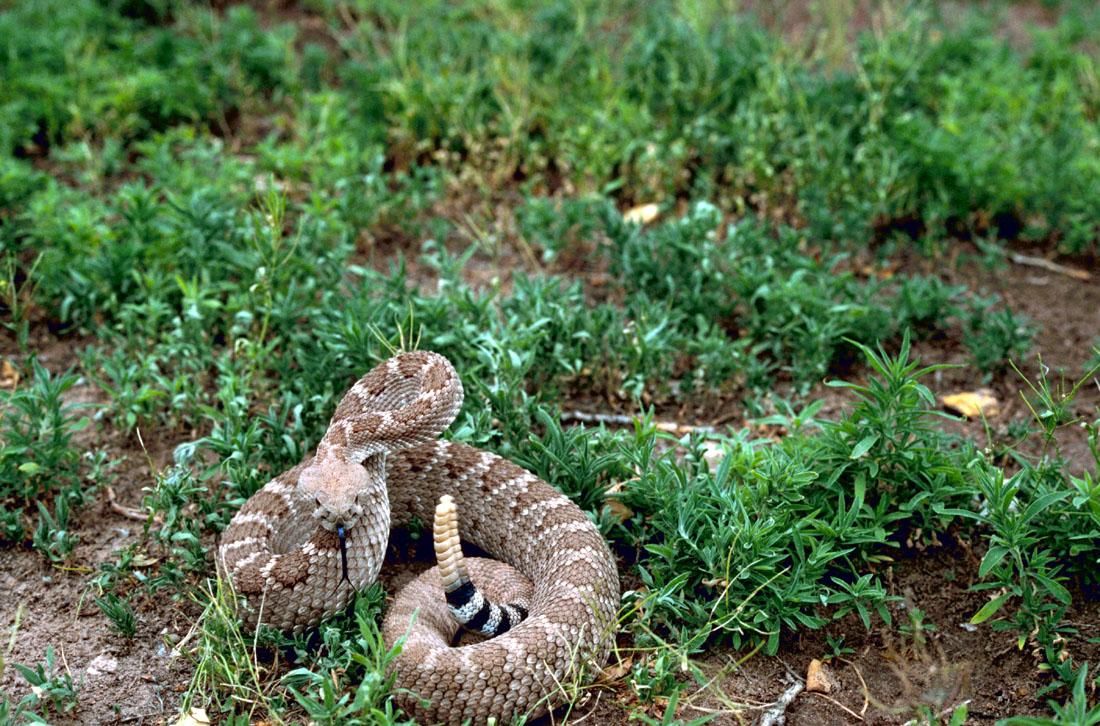
Crotalus Atrox, also known as the Western diamondback rattlesnake which features triangular shaped head and heavy bodied. It is the largest southwestern rattlers and is considered as the most dangerous as they are venomous. The size of the snake is up to 7 feet long, around 2 meters. The tail has got black and white stripes and there are dark diamond shaped patterns on its back. On its face, there are two dark diagonal lines starting from its eyes to jaw on both side.

https://upload.wikimedia.org/wikipedia/commons/9/97/Western_diamondback_rattlesnake.jpg
During hot daytime, they regularly spend time in shades of rocks, low growing shrubs or take advantage f other animals' underground burrows. The western diamondback rattlesnake is different to other rattlers as other rattlers will escape when they met other larger size animals and only when they feel safe to do that and without threatened. But the western diamondback rattlers will not escape even when they don't threatened. They stay at the same place hissing and so you can see how scary and dangerous they are. Snakes can only extend up to 40% of their body length when they try to attack, but the motion of them attacking takes only less than half a second and so you can see how fast they are. Some of the rattlesnake bite are called dry bites which means there are no venom injected to the skin. Depends on what kind of snake you have bitten, adults usually take 1 to 9 months for a full recovery. On below, I have listed the symptoms after bitten by a rattlesnake and how the venom affect to the body.

Symptoms after getting a rattlesnake bite:
  • Temporary or permanent tissue and muscle damage
  • Two puncture marks
  • Drooping eyelids
  • Tiredness and muscles weakness 
  • Low blood pressure
  • Internal bleeding which will also cause bruising and discoloration on the skin
  • Blister, pus, black tissue around the wounds, ulcer
  • Tingling and numbness
  • Pain and burning sensation at the area of the snakebite 
  • Hard to breathe
  • Swelling and redness at the area of the snakebite after a few minutes
  • Dizzy, vomit, sweating, thirst, headache and feeling sick
  • May cause kidney failure and serious allergic reaction
http://www.herpnation.com/wp-content/uploads/2013/01/Crotalus-atrox.jpg
On below, I have found a report in 2015 of rattlesnake bite in Arizona discussed by RandyBabb and Keith Boesen- 
Randy Babb, who is a biologist with the Arizona Game and Fish Department, said 'Arizona is home to 13 species of rattlesnakes, with eight or nine species living in Southeastern Arizona, depending on how the region is defined. They range far and wide- from deserts, canyons and forests to urban backyards.'

Keith Boesen, who is a director of the Arizona Poison and Drug information center, said '150 to 160 rattlesnake bites are reported every year to the Poison and Drug information center, which covers all Arizona counties except Maricopa County.'


References:

  • http://www.desertusa.com/reptiles/rattlesnake-bites.html
  • http://www.whmentors.org/saf/snakes.html
  • http://www.livescience.com/43683-rattlesnake.html
  • http://www.backpacker.com/survival/out-alive-bitten-by-a-rattlesnake/2/#bp=0/img1
  • http://www.meb.uni-bonn.de/dtc/primsurg/docbook/html/x12657.html
  • http://tucson.com/news/local/rattlesnakes-are-out-and-they-re-biting/article_023b5a36-9f33-591b-bce8-bead42c4fa23.html
  • http://www.nhs.uk/conditions/bites-snake/pages/treatment.aspx

Analysing the anatomy of the foot and further research on the healing process of the snake bite

On below, I have looked at the anatomy of the foot where I will be placing my wound and also how a snake bite affects to the skin. This helps me to understand more about how the snake bite wound heals and also allows me to research what the skin will looks like after bitten by a snake.

The anatomy of the foot:
http://www.agipilates.hu/wp-content/uploads/2015/08/anatomy-foot-2.jpg
http://www.angelopodiatry.com/images/ft_frntvw.jpg
http://studydroid.com/imageCards/11/if/card-35208619-front.jpg
http://www.footankleinc.com/images/foot_anatomy.png
I am going to place my snake bite wound on Inferior Extensor Retinaculum area on the foot.
http://img.webmd.com/dtmcms/live/webmd/consumer_assets/
site_images/media/medical/hw/n5551173.jpg
Rattlesnake bite has got two deep puncture wounds and the puncture wounds are usually in sharp pointy shape. Rattlesnake's venom affects clotting with the blood and they are hemotoxic. After bitten by a rattlesnake, the blood clots quickly which cause internal bleeding and can lead to heart attack or stroke. Puncture wounds can caused infection easily and needs to treat it appropriately. ' A wound is classified as infected when the bacterial load is greater than 10 (5) bacteria per gram of tissue'. On above, you can see what the skin and underneath the skin looks like when you get a deep puncture mark. 
http://www.uofmmedicalcenter.org/healthlibrary/Article/116550EN
'Puncture wounds that arise as a result of animal bites generally have pockets of dead space, which should be flushed and a dependent drain placed in them. 
Alternatively, the wound could be closed using walking sutures to eliminate this dead space, but only if the wound is considered sufficiently clean.'

'Snake venom will affect the skin, fatty tissue, muscles, nerves, joints and blood vessels in the area of the bite. Depending of how severe your condition is, it may take from a few weeks to a few months to heal from this injury. Most snake bite victims who receive early treatment with antivenom will recover fully. Rarely, some degree of permanent injury to the nerves or muscle may occur with permanent numbness or loss of joint function.

Although uncommon, there may be a delayed allergic reaction to the antivenom that you received. If this occurs, symptoms usually begin 7-14 days after treatment. Symptoms may include rash, itching, hives, joint or muscle aching, and fever. These are usually mild and can be treated as an outpatient with antihistamines and other medicines.

Snake venom can affect the ability of the blood to clot. This can lead to abnormal bleeding. Treatment with antivenom corrects this problem; however, sometimes the clotting disorder recurs up to two weeks after treatment.'

'A puncture wound can cause infection because it forces bacteria and debris deep into the tissue and the wound closes quickly forming an idea place for bacteria to grow.' 
http://www.dovemed.com/uploads/images/shutterstock_74446060.height-400.jpg
Process of wound healing:
1. The wound is created on the skin and the blood vessels is damaged
2. The wound starts bleeding
3. The blood starts to clot
4. Scab is formed and there are exudate under the scab. Granulation tissue which is a new vascular tissue in granular will then form on an ulcer or the healing surface of the wound
5. The scab starts to lift up and peal off from the skin and there are regenerated epidermal tissue helping to heal the wound. 

A venomous snake bite will take a longer healing time as after a person was bitten by a snake, the venom spread out quickly inside the body and also because the snake bite will swell and also the venom will cause tissue death around the area the victim's got bitten by the snake. 

Recovery times of a viper snake bite:
http://image.slidesharecdn.com/snakebitesedit-150726102130-lva1-app6891/95/snake-bites-24-638.jpg?cb=1437912328
Management: (a) First aid (1)
Aims are to retard absorption of venom,
provide basic life support & prevent further
complic...
http://www.slideshare.net/kywong5005/snakebites-edit

References:

  • https://www.nlm.nih.gov/medlineplus/ency/imagepages/19616.htm
  • http://www.vettimes.co.uk/article/wound-types-and-healing-part-three-classification-of-injuries/
  • http://www.uofmmedicalcenter.org/healthlibrary/Article/116550EN
  • http://www.medicinenet.com/cuts_scrapes_and_puncture_wounds/page3.htm
  • http://www.slideshare.net/kywong5005/snakebites-edit
  • https://www.youtube.com/watch?v=xHAI0NjuTcs

Snake Venom and how it reacts to the body

http://s.hswstatic.com/gif/snake-bite-3.jpg
The snake venom contains proteolytic enzymes which destroy tissues and helps to disabling prey. Hyaluronidase destroy the mucopolysaccharides to let subcutaneous spread of the venom. The venom is hemotoxic which will affect blood cells, the heart, organs and also blood vessels. It causes inflammation and breakdown in the body, tissue damage, organ degeneration and disrupts blood clotting. When the victim tries to breath, they can feel the pain and the tissue starts to die after they got bitten. The hemotoxic venom helps the snake to digest the prey more easily. It also contains myotoxins and cytotoxins whch destroy muscles and cells which add to the failure of the cardiovascular system. The phospholipase A2 causes the hemolysis past estero lysis of red cell membrances and accelerate muscle necrosis. Thrombogenic enzymes produce a consumptive coagulopathy which leads to bleed. The amount of venom injected depends on how long the strike takes, it also depends on the size of the prey and the snake's degree of threat perceived. But there is exceptions such as the western diamondback rattlesnake can deliver a significant amount of venom in a bite.


http://33.media.tumblr.com/tumblr_mbo6vza40k1qlvt53o6_250.gif
On above, you can see what the human blood looks like when mix with snake venom. The blood turns into solid form which shows that the venom coagulates the blood and will cause internal and also external bleeding in the body. 


http://www.mizoram.gov.in/Health-Care-CDAC-Kol-gksaha-v2.0/snake%20bite.gif

The photo on above shows the difference between a poisonous snake bite and a non-poisonous snake bite looks like. The bite from a poisonous snake appear in two fangs marks and it is large and deep and sometimes there might be some small marks at the back which is created by the other teeth. While for the non-poisonous snake bite, it appears 2 rows of teeth marks but not fangs mark. 
http://reference.medscape.com/features/slideshow/snake-envenomation
When the snake strikes, they inject the venom through their hollow fangs to the victim or prey. On above is an example of what the fangs marks looks like after a person got bitten by a poisonous snake.  The body reacts to the venom very quickly and in order to treat the snake bite, antivenom need to be injected to the body as it spread quickly to other parts of the body. 
http://www.newtonsapple.org.uk/wp-content/uploads/2014/08/venomous-snake-fangs-diagram.jpg
http://www.wildbackpacker.com/wp-content/uploads/2011/05/Snakebite_symptoms.png
http://www.sundaytimes.lk/140720/uploads/SnakeBiteGra.jpg


http://image.slidesharecdn.com/snakebitefirstaids-150716025134-lva1-app6891/95/snake-bite-firstaid-facts-prevention-16-638.jpg?cb=1437590789
Anitvenom:
Reactions might appear when injected larger volume of antivenoms to the body. Serum sickness occurs in around a third of patients injected antivenoms and they characterised symptoms such as fever, arthralgia, myalgia and rash developing four to fourteen days after administration of antivenom. The serum sickness can be treated with prednisolone. 

Symptoms after bitten by a venomous snake?
  • Swelling, blistering, bruising, dead tissue and redness in the location the person got bitten 
  • Pain 
  • Dropping eyelids
  • Feeling sick, dizzy, fainting and mental confusion, feeling nervous, shock
  • Difficulty in breathing 
  • Irregular heartbeat
  • Sweating
  • Swelling of the gums, lips and tongue
  • Diarrhoea
  • Internal and external bleeding 
  • Itchy lumps on the skin
  • Kidney failure which means little or no urine being passed
  • Some people might have allergic reaction and it will even make the condition of the snake bite more serious and worse
  • Death might caused if the victim did not treated the snake bite 
On below is a photo which shows what the patient's arms and fingers look like after 3 day he got bitten by a copperhead snake. You can see there is rapid swelling on the area he got bitten and redness, blisters and bruises were formed as well. 
http://img.medscape.com/pi/features/slideshow-slide/snake-envenomation/fig18.jpg
In the video on above, the victim was bitten by a rattlesnake and you can see his hand is swollen, the fang marks on his hand, he is sweating, there are worm like movements under his skin and his nose and gums were bleeding. The video also tells us that different human has different metabolism and different reactions to venom. And so every bite is different and unpredictable. 

On below is a photo which shows the victim's hand is swollen and there are pus, bruises and redness around the wound. 
http://ww3.hdnux.com/photos/41/61/26/8852882/3/2048x2048.jpg
Recovery times varies depends of the species of the snake the victim was bitten by. An adder is an example of a venomous snake in Uk. In most cases, children who got bitten by an adder will make a full recovery in one to two weeks. While for adults, it will take a longer period of time and it usually take more than three weeks for a full recovery. Some people might even take longer and it might takes one to nine months. 

References:
  • http://www.thelancet.com/journals/lancet/article/PIIS0140-6736(09)61754-2/fulltext?version=printerFriendly
  • http://lifeandscience.org/keepers/2011/02/13/no-such-thing-as-a-poisonous-snake-part-2/
  • http://www.mirror.co.uk/news/world-news/country-music-star-posts-horrific-6714692
  • http://www.nhs.uk/Conditions/Bites-snake/Pages/Treatment.aspx

Silicone Mold Making Project (Snake Bite)

At the beginning of the project, we will start to learn how to create a mold with the use of Silicone and also to create wounds from the mold. In lesson, we have got a partner who we need to create the wound on later during the assessment. The wound that I will be creating on my partner is a snake bite wound. Later on on this blog, I will start to do researches to investigate the snake bite wounds, for instance: After bitten by a snake, what changes will effect to the human body, etc. I will also characterize my partner so to tell the audience the story of the wound, how the wound was caused, why and where it was bitten. This helps to make the wound more realistic and interesting.

Thursday, 1 October 2015

The history of Prosthetics (Special Effects Make-up)

What is Special Effects?
The word 'Special Effects' links to make-up and it takes make-up into another level and express it in a different way. Rather just using make-up for beautification or a way to present a character, special effects make-up uses different materials and products to convey an extraordinary form of art. Example of prosthetic make-up are creating bruises, tattoos, scars make-up, non-human creature, etc. Nowadays, special effects make-up involves in different film making such as horror, fantasy, science fiction, etc.
http://i.telegraph.co.uk/multimedia/archive/01201/frankensteins-mons_1201831f.jpg
The classic film 'Frankenstein' was published by Universal Pictures during 1931 and it has some much impact to the cinematic and also it is the start of making horror movies. Boris Karloff as "The Monster" in 'Frankenstein' is one of the most iconic character in horror movies. 

Prosthetic make-up has become an important roles in film making. Take from example, the silent horror films such as 'The Phantom of the Opera' in 1925, without sound, the film progress visually and so the way how the characters styled tell the story of them to the audience and create the grotesque effects. 
Leonidas Frank Chaney, also named as Lon Chaney, was an American director, screenwriter and also stage and film actor who has acclaimed for his make-up techniques in the silent films era and he is known as the "The Man of a Thousand Faces' which stands for his skills to transform himself to other characters through the use of make-up. He was born in 1883 and died in 1930. He applied his own make-up and 'The Phantom of the Opera' and 'Quasimodo in the Hunchback of Notre Dame' are his well-known and excellent works. He was seen as one of the most powerful actors in early cinematic with his grotesque and afflicted character perform by him. Later on, film makers 'has devised a way in which an actor's face could change character as the viewed watched. It was done by applying a little make-up at a time, and exposing the actor's face to the film after each application.'. This process takes a long period of time as the actor need to stay still when they shot the film and also when the make-up was applied on them. In this method, the result was projected through the projected at normal speed and this will make the actor's transformation look more natural. Chaney died as the cinema started on the sound era.  

As the ideas of transforming characters with make-up has expanded and the development in industry, make-up products became more specialised, The products help to create more realistic pieces of work such as ageing skin, changing the features on the face, etc. Latex, mold and mask are the products which can reshape features. Contact lenses is also a way to change the identity of the characters. 

At present, horror movies has become one of the genres in cinematic and also one of the well-known ones. Through the developments in technology, for instance plastics technology which allows special effects to work more effective and successful in creating more realistic and creative characters. It also helps to make horror movies more exciting, frightening and horrific.

William Tuttle, who is the head of the MGM Make-up department, won the first special Academy Award in 1965 which was presented for make-up artistry. He got the award from working for the Galazx-Scarus/ MGM Film, The Seven Faces of Dr. Lao. This award was presented 17 years before makeup became an official Oscar category. 
http://earnthis.net/wp-content/uploads/2013/08/seven_faces_of_dr_lao.jpg
'The Seven Faces of Dr. Lao' is a 1964 film which is directed by George Pal and the screenplay is written by Charles Beaumont and Ben Hecht. The story is based on the novel, 'The Circus of Dr. Lao' by Charles. G Finney. The film is presented in metrocolor and  is about a magical circus who visit a small town in the Southwest United States and the impact they bring to the people in the town. In the film, Tony Randall transformed and performed in 7 different characters in the film and they are the 'Apollonius', 'Merlin', 'The Medusa', 'The Serpent', 'The Abominable Snowman', 'Pan' and 'Dr Lao'.
https://forgottenfilmcast.files.wordpress.com/2011/10/dr-lao-3.png
I especially like the style of 'Medusa' in the film which is the character on the photo which is shown on above. The reason is that I like how the ideas of Medusa''s character was presented in the film and the way when people look into Medusa's eyes, they will turn into stones. For the styling, the use of green contact lenses definitely change the identity of the character and makes it more interesting and enchanting. I also like the way how the snakes on her head moves which makes it look realistic and the different directions the snakes are positioned. 

References:
  • Kehoe, V. (c1991). Special Make-up Effects. Focal Press.
  • http://www.lookandlearn.com/blog/10620/the-special-effects-of-makeup/